

In the world of air travel, packing your carry-on luggage is a crucial step that can greatly impact your flight experience. With airlines enforcing strict rules regarding the size and weight of carry-on luggage, it's essential for every traveler to familiarize themselves with these restrictions before heading to the airport. Failure to follow these guidelines can result in unexpected additional charges or even the need to check a bag you had planned to carry on.
As we head into 2024, carry-on luggage standards keep evolving, reflecting changes in security policies, aircraft designs, and passenger expectations. These variations between airlines add an extra layer of complexity when planning your trip. That's why we've compiled this comprehensive guide to carry-on luggage dimensions for all airlines, designed to provide you with all the information you need to travel with total peace of mind. Whether you're flying a major international carrier or a budget airline, knowing your carry-on luggage specifications is the first step toward a worry-free trip.
Why are the dimensions of the cabin suitcase important?
When packing for a flight, it can be tempting to try to maximize the space available in your carry-on luggage to avoid checking in a bag. However, airlines enforce strict restrictions on the size and weight of carry-on luggage for several crucial reasons, which affect both safety and comfort on board.
Security and Compliance
The main reason airlines set strict limits on the size and weight of carry-on luggage is safety. Overhead compartments have a limited capacity and are designed to support a certain weight. Overloading with oversized or heavy luggage could compromise the structure of these compartments, posing a risk in the event of turbulence or a difficult landing. Furthermore, in the event of an emergency, access to aisles and exits must not be hindered by improperly stowed luggage or luggage exceeding from the compartments.
Fairness and comfort
The restrictions also aim to ensure a fair and comfortable flight experience for all passengers. If travelers bring carry-on luggage of varying sizes, passengers boarding last could find themselves without available storage space, forcing them to check their bags at the last minute. By standardizing the dimensions of carry-on luggage, airlines are working to ensure that every passenger has fair and sufficient storage space.
Space optimization
The dimensions specified by airlines are designed to optimize the use of cabin space. By limiting the size of carry-on luggage, airlines can more accurately calculate how much luggage can be safely accommodated in overhead compartments, helping to avoid delays when boarding and disembarking aircraft.
Consequences of non-compliance
Failure to comply with size and weight restrictions can have financial and logistical consequences for travelers. Luggage that exceeds the authorized limits may be refused at the gate or require additional fees to be checked into the hold. This can not only result in unexpected costs but also delay your passage through security and boarding.
Understanding IATA Standards
The International Air Transport Association (IATA) plays a central role in regulating airline industry standards, including carry-on luggage guidelines. Understanding the standards established by IATA is crucial for any traveler, as they serve as a benchmark for many airlines around the world. Here's a look at what you need to know about IATA's carry-on luggage size standards.
What is IATA?
IATA is an international airline trade organization, representing, governing, and serving the air transport industry. Founded in 1945, it now comprises approximately 290 airlines representing 117 countries. IATA's primary objective is to promote safe, regular, and economical air transport, which includes the standardization of practices and services within the airline industry.
The standard dimensions recommended by IATA
For carry-on luggage, IATA recommends dimensions that ensure suitcases can be easily accommodated in overhead compartments of aircraft cabins or under the seat in front of the passenger. According to IATA standards, the ideal dimensions for a carry-on suitcase should not exceed 56 cm (22 inches) in length, 45 cm (18 inches) in width, and 25 cm (10 inches) in height. This includes handles, side pockets, and wheels.
It is important to note that these dimensions are recommendations, and airlines may adopt their own restrictions, often based on the size and configuration of their aircraft. Therefore, while IATA standards serve as a general guide, travelers should always check the specific requirements of the airline they are flying with.
Why IATA standards are important
The standards established by IATA help harmonize practices and expectations across the airline industry globally. By adopting these recommendations, airlines can provide a more consistent experience for passengers, reducing confusion and inconvenience during international travel. For travelers, knowing these standards can make luggage planning easier and avoid unpleasant surprises at the airport.
Verification and compliance
Before traveling, it's a good idea to check the dimensions of your carry-on suitcase with a tape measure to ensure it meets both IATA guidelines and your airline's specific restrictions. Investing in a suitcase designed to meet these standards can make your air travel smoother and stress-free.
Cabin suitcase dimensions by airline
Allowable carry-on luggage dimensions can vary considerably from airline to airline. While IATA standards provide a general framework, each airline sets its own rules based on cabin configuration, company policy, and other operational considerations. Here's an overview of carry-on luggage dimensions for a selection of major, low-cost, and regional airlines.
Major airlines
These airlines often operate international flights and offer various classes of service. Their carry-on luggage restrictions tend to be more generous, but still strictly enforced.
Low-Cost Airlines
Budget airlines may have stricter restrictions to minimize costs and maximize cabin space. It's crucial to check their policies, as fees for non-compliant luggage can be significant.
Regional and charter companies
These airlines may have specific restrictions due to the smaller size of their aircraft. Passengers should pay particular attention to the permitted dimensions.
Summary table of dimensions by company
Here's a simplified table showing the carry-on luggage dimensions allowed by some airlines. Note that this information is subject to change, and it's always recommended to check directly with the airline before traveling.
| Airline | Maximum Dimensions (cm) | Maximum Weight |
|---|---|---|
| Air France | 55 x 35 x 25 | 12 kg |
| Lufthansa | 55 x 40 x 23 | 8 kg |
| Emirates | 55 x 38 x 20 | 7 kg |
| Ryanair | 55 x 40 x 20 | 10 kg |
| EasyJet | 45 x 36 x 20 | Without limit |
| Delta Airlines | 56 x 35 x 23 | Without limit |
| Southwest Airlines | 61 x 41 x 28 | Without limit |
| British Airways | 56 x 45 x 25 | 23 kg |
| Qantas | 56 x 36 x 23 | 7 kg |
| Japan Airlines | 55 x 40 x 25 | 10 kg |
| United Airlines | 56 x 35 x 22 | Without limit |
| American Airlines | 56 x 36 x 23 | Without limit |
| Singapore Airlines | 55 x 40 x 20 | 7 kg |
| Cathay Pacific | 56 x 36 x 23 | 7 kg |
| Qatar Airways | 50 x 37 x 25 | 7 kg |
| Turkish Airlines | 55 x 40 x 23 | 8 kg |
| Air Canada | 55 x 40 x 23 | 10 kg |
| KLM | 55 x 35 x 25 | 12 kg |
| Etihad Airways | 50 x 40 x 21 | 7 kg |
| Korean Air | 55 x 40 x 20 | 12 kg |
| Norwegian | 55 x 40 x 23 | 10 kg |
| Virgin Atlantic | 56 x 36 x 23 | 10 kg |
| Air New Zealand | 118 (total linear) | 7 kg |
| Alaska Airlines | 56 x 36 x 23 | Without limit |
| Iberia | 56 x 45 x 25 | 10 kg |
| Finnair | 56 x 45 x 25 | 8 kg |
| Aer Lingus | 55 x 40 x 24 | 10 kg |
| AirAsia | 56 x 36 x 23 | 7 kg |
| Wizz Air | 40 x 30 x 20 | 10 kg |
| Vueling | 55 x 40 x 20 | 10 kg |
This table is a general guide to help you plan, but keep in mind that policies may vary depending on the specific route, ticket class, and other factors. Some carriers may also allow an additional personal item, such as a purse or laptop, in addition to your carry-on luggage.
Tips for travelers
- Always check before you travel: Carry-on luggage policies are subject to change, so check the airline's website or contact their customer service for the most up-to-date information.
- Invest in an adaptable suitcase: Consider a carry-on suitcase designed to fit even the most restrictive dimensions, especially if you travel frequently with different airlines.
- Prepare for exceptions: Some airlines may have exceptions for special equipment, musical instruments, or medical needs. Inquire about these exceptions in advance.
By following the carry-on luggage dimensions specified by your airline, you can avoid unexpected charges and make your travel experience more enjoyable and stress-free.
Tips for choosing the right cabin suitcase
Selecting the perfect carry-on suitcase is a crucial part of planning your trip, especially with the various restrictions enforced by airlines. A well-chosen suitcase can not only save you extra fees but also make your travel experience more enjoyable. Here are some tips to help you choose the carry-on suitcase that best meets your needs.
Selection criteria for a cabin suitcase
- Dimensions and weight: Make sure your suitcase's dimensions comply with the restrictions of the airline you travel with most frequently. Choose a lightweight suitcase to maximize the weight of items you can carry without exceeding the authorized limit.
- Materials: Polycarbonate suitcases are lightweight and durable, while ABS suitcases are generally more affordable but less durable. Fabric suitcases offer flexibility for storing additional items but may not offer the same weather protection as hard-shell suitcases.
- Durability: Look for suitcases made with high-quality materials and sturdy zippers. Wheels and handles should be securely attached and designed to withstand frequent use.
- Maneuverability: Choose a suitcase with four 360-degree spinner wheels for easy maneuverability through airports and hotel hallways. Adjustable telescopic handles are also essential for optimal comfort.
- Security: A suitcase fitted with a TSA lock allows security agents to inspect your luggage without damaging the lock. This is an important consideration for travel to the United States and other countries with strict security checks.
- Compartments and Organization: Suitcases with multiple compartments and pockets can make it easier to organize your belongings and quickly access your travel documents, electronic devices, and other necessities.
Advantages and disadvantages of different types of suitcases
- Hard-sided suitcases: Offer better protection for fragile items and are often more water-resistant. However, they are less flexible if you need to pack additional items and can scratch or break under heavy pressure.
- Soft-sided suitcases: Can fit in tight spaces and are generally lighter. They also offer exterior pockets for easy access. Their disadvantage is less protection against shocks and weather.
Choosing the right carry-on suitcase requires considering your airline's restrictions, as well as your own travel needs. A well-chosen suitcase should make your travels easier, protect your belongings, and serve you faithfully for many years to come. Remember to check your airline's size and weight limits before making your purchase to ensure your new suitcase meets all requirements.
Tips for maximizing the space in your carry-on suitcase
Traveling light without sacrificing your essentials requires smart planning and packing techniques. Here are some tips to help you maximize the space in your carry-on suitcase, allowing you to pack everything you need while complying with airline size and weight restrictions.
Storage and organization techniques
- Roll instead of folding: Rolling your clothes instead of folding them can not only save space but also reduce wrinkles. This technique is especially effective for t-shirts, jeans, and cotton clothing.
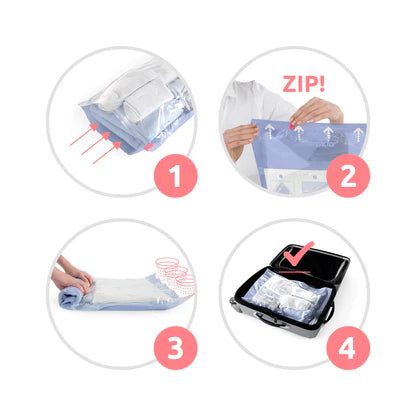
- Vacuum Storage Uses: Travel -grade vacuum storage products allow you to group similar items together, making it easier to organize and access your belongings. They can also compress your clothes, freeing up valuable space.
- Make the most of empty space: Use every available corner of your suitcase. For example, store socks or chargers inside your shoes. This helps maintain the shape of your shoes while efficiently utilizing unused space.
List of essential items to take
- Wise clothing choices: Select versatile, interchangeable pieces that can be combined to create different outfits. Opt for neutral colors and pieces that can be layered to suit different climates.
- Liquid Limits: Liquid restrictions in hand luggage are strict. Pack miniature versions of your toiletries or use reusable containers to comply with the 100 ml limit per item.
- Minimize electronics: Bring only essential devices. If possible, opt for multi-functional devices, such as a smartphone that can act as a camera, music player, and game console.
Efficient arrangement of objects
- Place heavy items at the bottom: For better stability and maneuverability of your suitcase, place the heaviest items near the wheels or at the bottom of the suitcase when standing it upright.
- Frequently Used Items at the Top: Keep items you're likely to use often or need to pull out quickly, such as travel documents or snacks, close at hand.
- Separating Liquids: Make sure all your liquids are easily accessible for security screening. Use a clear plastic bag to group your liquids, in accordance with airport regulations.
By following these tips, you can maximize the space in your carry-on suitcase, ensuring you have everything you need without adding unnecessary luggage. Proper organization and careful packing selection can make your travel experience more enjoyable and stress-free.
Prohibited items and liquid restrictions
When packing your carry-on bag, it's crucial to be aware of restrictions regarding prohibited items and liquids. These rules are in place to ensure the safety of all passengers and must be followed to avoid delays and inconveniences during security screening.
Items prohibited in the cabin
The list of items prohibited in the cabin may vary slightly from one airline to another and according to the regulations of different countries. However, certain items are universally prohibited:
- Weapons and sharp objects: Knives, scissors with blades longer than 6 cm, razors (except disposable razors with encapsulated blades), and other pointed or sharp objects.
- Tools: Screwdrivers, hammers, pliers, and any tool that can be used as a weapon.
- Flammable and explosive substances: Lighters (except for certain ones authorized in person), paints, matches, and fireworks.
- Chemicals and Toxins: Acids, alkalis, damaged lithium batteries, and radioactive materials.
Liquid restrictions
Restrictions on liquids in carry-on luggage are standard at most international airports:
- 100 ml Rule: All liquids, gels, pastes, lotions, and creams must be contained in containers no larger than 100 ml each.
- Transparent bag: All these containers must be placed in a single, resealable, transparent plastic bag with a maximum capacity of 1 liter. Only one bag per passenger is allowed. You can also use special travel vacuum bags .
- Exceptions: Medications and baby food are generally exempt from these restrictions, but you may need to present these items separately at security screening and provide an explanation.
Tips for transporting special items
- Electronics: Electronic devices are permitted in the cabin, but you may need to remove them from your luggage to go through security separately.
- Medications: Keep your medications in their original packaging with the prescription visible. It is advisable to have a letter from your doctor for essential medications.
- Food: Solid foods are generally allowed, but gel or liquid foods must follow the 100 ml rule.
By following these guidelines, you can ensure a smooth passage through security and avoid having to leave valuables or necessities behind. It's always recommended to check your airline's specific restrictions and airport regulations before traveling, as rules are subject to change.
Preparing for Security Check
Going through security can be one of the most stressful aspects of air travel. However, with the right preparation, you can simplify the process and reduce wait times. Here's how to prepare your carry-on luggage and yourself for a quick and smooth passage through security.
Strategic packaging
- Organize your liquids: Place all your liquids, gels, and aerosols that meet the 100ml rule in an easily accessible, clear plastic bag. This allows you to quickly remove it from your carry-on bag and scan it separately.
- Separate your electronics: Large electronics, such as laptops and tablets, often need to be placed in separate bins during security. Keep them in an easily accessible location for easy removal and replacement.
- Plan for your security needs: If you wear a belt, bulky jewelry, or shoes that are difficult to remove, consider placing them in your carry-on baggage until you've cleared security. This can speed up your passage.
Tips for an efficient passage
- Dress smart: Wear clothes and shoes that are easy to take off and put back on as needed. Slip-on shoes or easily adjustable boots can save time.
- Empty your pockets: Before reaching the security checkpoint, transfer the contents of your pockets to your carry-on bag. This includes your phone, wallet, and keys. Use a dedicated pocket in your carry-on luggage for these items for quick access after security.
- Be prepared for inspection: If you are carrying special items that may require additional inspection, such as medications or specific electronic equipment, be prepared to explain and present them if requested.
After security check
- Quickly reorganize: Once you've cleared the security check, take a moment to reorganize your belongings. This includes putting away your liquids, returning your electronics to their proper place, and putting back your shoes, belt, and jewelry if you took them off.
- Remain calm and courteous: Security personnel are there to ensure the safety of all passengers. Following their instructions and remaining patient contributes to a more positive experience for everyone.
By following these tips, you can make your security experience as smooth and stress-free as possible. Being well-prepared not only allows you to get through security faster, but also allows you to start your trip in a more relaxed and organized manner.
Special Cases and Exceptions
Even with careful planning, some travelers may encounter situations requiring special attention when traveling with carry-on baggage. Whether for medical reasons, special equipment, or the needs of young children, it's important to know the exceptions to the general carry-on rules and how to handle them.
Medical equipment
- Advance notification: For essential medical equipment, it is advisable to contact the airline before your trip to inform you of your needs. This includes devices such as CPAP machines for sleep apnea, folding wheelchairs, and canes.
- Documentation: Always carry medical documentation or a prescription justifying the need for equipment or medication. This can facilitate the security screening process.
Musical instruments
- Airline Policy: Check your airline's specific policy regarding the transport of musical instruments. Some instruments may be permitted in the cabin if they fit in the overhead compartment or under the seat in front of you.
- Purchasing an extra seat: For larger instruments, such as a guitar or cello, consider purchasing an extra seat. This ensures the instrument's safety during the flight.
Traveling with children
- Baby luggage: Most airlines allow parents to carry a baby bag in addition to their own carry-on luggage. This bag can include items such as diapers, wipes, bottles, and baby food.
- Strollers and Car Seats: Strollers and car seats can often be checked for free at the ticket counter or gate. Ask about available options and the airline's specific procedures.
Other considerations
- Sporting and recreational goods: Sports equipment such as surfboards, skis, and climbing equipment may require special arrangements and additional fees. Check your airline's luggage policy.
- Regional foods and products: If you are transporting specialty foods or regional products, make sure they comply with the regulations of the destination country. Fresh produce and certain food products may be subject to restrictions.
General advice
- Advanced Planning: Take the time to plan and prepare the necessary documents for any special equipment or needs.
- Communication with the airline: Clear communication with your airline before travel can help avoid surprises and ensure your specific needs are addressed.
By taking these special cases and exceptions into account, you can ensure your travel experience is as smooth and stress-free as possible, even when you have to navigate the complexities of carry-on luggage rules.
Summary of key points
- Know the restrictions: Carry-on luggage size and weight limits vary by airline. Always check this information before traveling.
- Prepare your hand luggage: Choose a cabin suitcase that meets the most restrictive standards and organize its contents to facilitate security screening.
- Follow safety rules: Restrictions on liquids, sharp objects, and special equipment are in place for everyone's safety. Following these rules helps avoid unnecessary delays.
- Plan for special circumstances: Whether you're traveling with medical equipment, musical instruments, or young children, advance preparation and communication with the airline can make your experience easier.
In 2024, cabin luggage dimensions vary significantly between airlines. Additionally, it's important to note that some airlines now charge additional fees for carrying cabin luggage. For example, a passenger pass may charge a €6 surcharge, which is crucial information to avoid unexpected charges during your trip. For detailed advice and a comparison of different airlines' dimensions and regulations, visit the individual airlines' websites.


